


Pharmaceutical Web Design Company Best Practices
April 8, 2026Pharmaceutical Web Design Company Best Practices
April 8, 2026Top Manufacturing Website Design Trends
April 10, 2026
- 15 min to Read
Quick-Read
- Modern manufacturing websites prioritize speed, clarity, and conversion-focused design
- Interactive tools like RFQs and spec sheets directly impact lead quality Mobile-first and performance
- optimization are now non-negotiable Trust signals and visual storytelling significantly influence buyer decisions
Introduction
In manufacturing, precision and efficiency are everything, and your digital presence should reflect that. Today, your website is often the first impression a buyer gets, long before a factory visit. Modern engineers and procurement managers expect fast performance, clear information, and intuitive navigation. If your site feels outdated, they will move on to a competitor.
In this blog, we’ll break down the top website design trends shaping manufacturing in 2026 and how they directly drive credibility, lead generation, and business growth.
Why Website Design Matters for Manufacturers
First impressions shape credibility instantly
Buyers often judge your capabilities based on your website before reviewing your certifications or speaking to your team. A modern, well-structured interface signals professionalism and operational maturity.
Complex offerings need structured communication
Manufacturing businesses deal with technical products, custom processes, and detailed specifications. Effective manufacturing website design ensures that this complexity is organized into digestible, user-friendly formats.
Supports longer B2B decision cycles
Industrial buyers don’t convert instantly. They research, compare, and validate. A well-designed website design for a manufacturing company acts as a self-service sales tool, providing the information they need at every stage.
Improves lead quality through clarity
When users clearly understand your capabilities, materials, tolerances, and industries served, the inquiries you receive are more relevant and conversion-ready.
Direct impact on RFQ conversions
Design isn’t just visual. It influences how easily users can request quotes, download specifications, or contact your team. Poor UX creates friction, while optimized flows increase submissions.
Strengthens trust with decision-makers
Engineers and procurement teams look for reliability. Clean layouts, case studies, certifications, and clear messaging reinforce trust without requiring direct interaction.
Enhances search visibility and discoverability
A structured website design for manufacturing companies supports SEO performance by improving crawlability, page speed, and content hierarchy, helping your business get found by the right audience.
Aligns marketing with sales objectives
A strategically designed website bridges the gap between marketing efforts and sales outcomes by guiding visitors to take meaningful actions rather than passively browsing.
Top Manufacturing Website Design Trends
What High-Performing Manufacturing Websites Are Doing Differently
Manufacturing websites in 2026 are no longer static brochures. They function as digital sales engines, designed to educate, qualify, and convert highly specific audiences. The following trends reflect how leading companies are aligning design with real business outcomes.
Mobile-First Design
Mobile traffic in B2B is no longer negligible. Engineers, plant managers, and procurement teams often research suppliers on their phones during meetings or site visits.
- Responsive layouts ensure seamless usability across all screen sizes
- Thumb-friendly navigation improves accessibility for on-the-go users
- Fast-loading mobile pages reduce bounce rates and increase engagement
A mobile-first approach is now foundational, not an afterthought.
Clean Industrial Aesthetic
Visual clutter is one of the biggest barriers to clarity in manufacturing websites. Modern design leans toward simplicity and structure.
- Use of whitespace to highlight key information
- Minimal color palettes that reflect industrial branding
- Clear typography for better readability of technical content
This approach enhances focus, making it easier for users to scan and understand complex offerings quickly.
Interactive Catalogs and Spec Sheets
Static PDFs are being replaced or enhanced with interactive experiences that improve usability and engagement.
- Filterable product catalogs based on material, size, or application
- Interactive spec sheets with expandable technical details
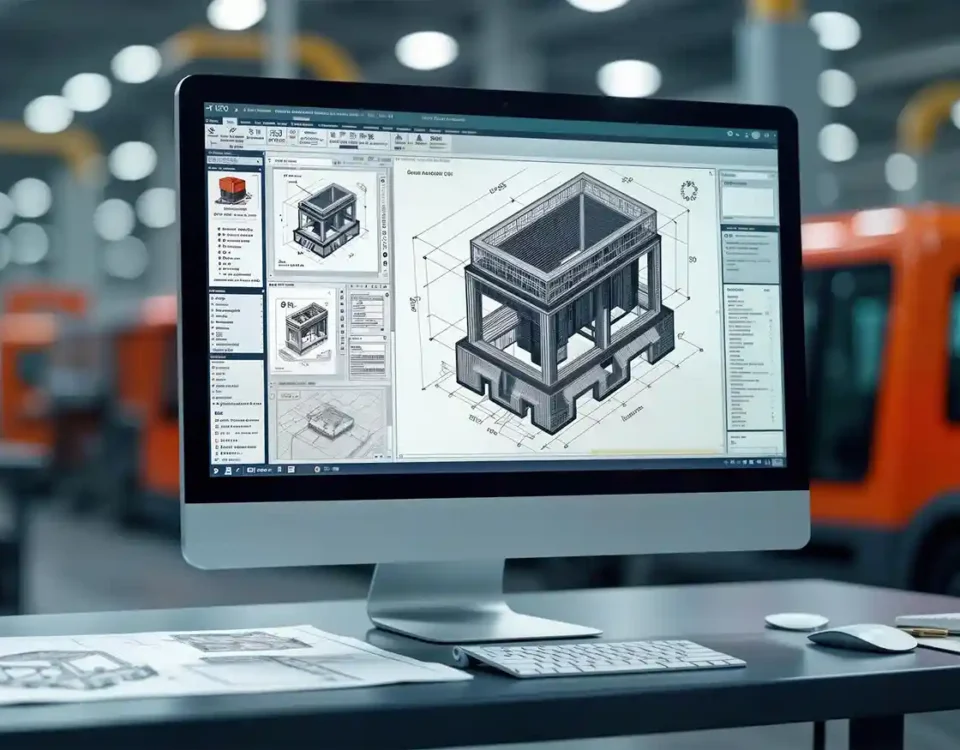
- Embedded CAD previews for engineering validation
These features reduce friction in the research phase and help buyers make faster decisions.
AI-Powered Chat and Search
Manufacturers are integrating intelligent tools to assist users in real time, especially when dealing with complex product queries.
- AI chatbots that answer technical and general inquiries instantly
- Smart search functions that understand intent, not just keywords
- Guided navigation that directs users to relevant products or services
This reduces dependency on manual support while improving user satisfaction.
Clear RFQ (Request for Quote) Flows
The RFQ process is the most critical conversion point on a manufacturing website. Leading designs are simplifying this journey.
- Short, structured forms that collect essential information only
- Multi-step RFQ flows that feel less overwhelming
- Contextual CTAs are placed across product and service pages
A well-optimized RFQ flow directly impacts lead volume and quality.
Core Web Vitals and Page Speed
Performance is now a ranking factor and a user expectation. Slow websites lose business before conversations even begin.
- Optimized images and lightweight codebases improve load times
- Server-side enhancements reduce latency
- Performance monitoring ensures consistent speed across pages
Fast websites not only rank better but also convert better.
Trust Signals
Manufacturing buyers look for proof before they reach out. Trust is built visually and contextually throughout the site.
- Certifications, compliance badges, and industry standards
- Client logos and partnership highlights
- Case studies that demonstrate real-world success
Strong trust signals reduce hesitation and validate your expertise.
Video and Virtual Facility Tours
Buyers want transparency. Seeing your operations builds confidence in your capabilities.
- Factory walkthrough videos showcasing processes and equipment
- Product demonstration videos explaining functionality
- Virtual tours that simulate an on-site visit
This trend bridges the gap between digital interaction and physical validation, especially for global clients.
Must-Have Features on a Manufacturing Website
A high-performing manufacturing website is not defined by design alone. Its effectiveness depends on how well it supports user intent, especially for engineers and procurement professionals who are actively evaluating suppliers. The right features remove friction, improve clarity, and guide users toward taking action.
RFQ forms are prominently placed
Your request for quote form should be easily accessible across key pages, including the homepage, product pages, and service sections. Visibility matters. If users have to search for it, you are already losing potential leads. The structure should be simple, asking only for essential details to avoid drop-offs.
Downloadable datasheets and CAD files
Technical buyers expect immediate access to detailed specifications. Providing downloadable resources such as datasheets, 3D models, and CAD files helps engineers validate your capabilities without needing to contact your team. This speeds up decision-making and builds trust early in the process.
Industry or sector-specific landing pages
A generic website cannot effectively speak to multiple industries. Dedicated landing pages tailored to sectors like automotive, aerospace, or healthcare allow you to highlight relevant expertise, certifications, and use cases. This improves both user relevance and SEO performance.
Live chat or callback widget
Real-time communication tools make a measurable difference in engagement. Whether it is a live chat option or a simple callback request feature, these tools allow users to get quick answers without leaving the site. This is particularly useful for high-intent visitors who are close to making a decision.
When these features are implemented strategically, your website shifts from being informational to being conversion-focused. This is where a professional manufacturing website design agency can make a significant difference by aligning functionality with user behavior and business goals.
Ready to refresh your brand?
Contact Upclues today and start your branding journey.
Final Thoughts
Manufacturing website design has shifted from a static presentation tool to a core driver of business growth. Companies that focus on clarity, usability, and performance are not just attracting visitors; they are guiding the right audience toward meaningful action. This is why website design for manufacturing is now centered on delivering real value at every stage of the buyer journey. The real advantage comes from consistency across the entire experience. When your website communicates capabilities clearly, loads quickly, and makes it easy to take the next step, trust builds naturally. Over time, this trust translates into stronger inquiries, better-qualified leads, and long-term business relationships.
At Uplcues, a branding and UI/UX design agency, this approach shapes how manufacturing brands establish and grow their digital presence. By aligning design strategy with actual user behavior and continuously refining based on insights, businesses are positioned not just to compete, but to convert with confidence.
If you're evaluating partners, consider working with the best website designers for manufacturing to ensure your website is built for performance, not just appearance.
Build Your B2B Website With Strategy
Contact Upclues today and start your branding journey.