


Common Mistakes to Avoid When Choosing a Urology SEO Company (2026 Guide)
September 10, 2026
Everything Architecture Firms Need to Know About SEO For Architects
September 14, 2026Common Mistakes to Avoid When Choosing a Urology SEO Company (2026 Guide)
September 10, 2026Everything Architecture Firms Need to Know About SEO For Architects
September 14, 202620 Effective Strategies to Strengthen SEO for Fertility Clinics
September 11, 2026
- 18 min to Read
Quick-Read
- Patients research fertility clinics for weeks before ever picking up the phone, so your website often makes the first impression.
- SEO for fertility clinics works best when it mirrors the patient's actual research journey, not just keyword volume.
- Local visibility, especially a fully optimized Google Business Profile, often drives more booked consultations than national rankings.
- Trust signals like physician bios, medical reviews, and real patient reviews directly influence whether a visitor calls or clicks away.
Introduction
Most patients don't call a fertility clinic the moment they suspect something's wrong. They spend weeks or months researching treatments, comparing success rates, and building a shortlist before making contact. If your clinic isn't visible during that research, you're losing patients before they even know you exist. That's exactly what SEO for fertility clinics is designed to fix.
For fertility care, patients often take longer to decide because they're comparing clinics, treatments, costs, and outcomes. SEO for fertility clinics is the practice of optimizing your website, content, and local listings so patients find your clinic during this research phase. It combines technical SEO, condition-specific content, local visibility, and trust signals such as physician credentials to help your clinic appear when patients are searching for answers.
This guide covers 20 practical strategies to help your clinic build that visibility, brought to you by the team at Upclues.
What Is SEO for a Fertility Clinic?
Fertility SEO is the process of shaping your clinic's website and online presence so it shows up when patients search for fertility treatments, IVF options, or clinics near them. It covers everything from the words on your service pages to how fast your site loads on a phone.
Think of it as the difference between a clinic that's easy to find and one that's invisible to the exact people searching for help right now.
SEO vs. Paid Ads vs. Offline
It helps to know where SEO fits next to your other marketing efforts:
- SEO builds lasting visibility in search results without paying per click. It takes longer to build but keeps working long after you stop actively promoting a page.
- Paid ads get you instant visibility, but the moment your budget stops, so does the traffic.
- Offline referrals (OB-GYNs, word of mouth) bring in trusted leads, but they don't scale the way search visibility can, and most referred patients still Google your clinic before booking.
A well-rounded strategy for Generative Engine Optimization leans on all three, but SEO is what keeps your clinic discoverable around the clock, even when no one's actively running a campaign.
Why Does SEO Matter for Fertility Clinics?
SEO for fertility clinics matters because it puts your clinic in front of patients at the exact moment they're searching for answers, not competing for attention after they've already chosen someone else. Fertility decisions are personal and research-heavy, so visibility during that search phase directly shapes who gets the call.
Patients rarely search once and book. They search "IVF success rates by age," then "IVF cost near me," then "best fertility clinic reviews," often across several sessions spread over days or weeks. Each of those searches is a chance for your clinic to show up, or to stay hidden behind competitors who've optimized for that exact question.
When your clinic ranks for the questions patients are already asking, it signals credibility before they've spoken to anyone on your team. A fertility center SEO strategy that consistently answers real patient questions does more to build trust than a single well-written homepage ever could.
More visitors means nothing if they're not the right visitors. A clinic ranking for "fertility clinic Ahmedabad" or "IVF clinic near me" is pulling in people ready to book, while generic traffic from unrelated fertility content rarely converts into consultations.
20 Effective Strategies To Strengthen Seo For Fertility Clinics.
1. Align Content with the Patient Research Timeline
Patients don't move from "something feels off" to "booked consultation" in one step. Fertility Clinic SEO works best when your content matches where they actually are in that journey, not just what keywords have the highest search volume.
Here's a simple framework worth building your content calendar around: the Patient Research Timeline:
- Awareness stage – Patients search broad, worried questions like "signs of infertility" or "why can't I get pregnant." Blog content and educational guides fit here.
- Comparison stage – They start searching "IVF vs IUI" or "best fertility treatments for PCOS," weighing options against each other. Treatment comparison pages work well here.
- Trust-building stage – They look up "fertility clinic reviews near me" or check physician credentials. Reviews, testimonials, and doctor bios matter most now.
- Consultation stage – They're ready, searching "fertility clinic consultation cost" or "book IVF appointment." This is where your service and contact pages need to close the deal.
Research on healthcare consumer behavior backs this up. Patients facing sensitive medical decisions typically consult several sources, review content, provider websites, and forums before committing to a call.
Mapping content to each stage means a patient never hits a dead end. They move from a worried Google search straight through to a booked consultation, all on your site.
For keyword research for healthcare topics specifically, this timeline also helps prioritize which condition-specific terms to target first, since awareness-stage keywords usually carry the highest volume but the lowest immediate conversion intent.
2. Utilize Long-Tail, Condition-Specific Keywords
Broad terms like "fertility clinic" are brutally competitive, and honestly, they don't tell you much about what the patient actually needs. Long-tail, condition-specific keywords do.
Keyword Research for a fertility clinic should focus on the specific questions and conditions patients are typing into Google, not just high-volume generic terms. Think:
- "IVF success rates over 40"
- "fertility treatment for PCOS"
- "low AMH treatment options"
- "male infertility causes and treatment"
- "best fertility clinic for recurrent miscarriage"
These phrases have lower search volume individually, but they carry much higher intent. Someone searching "low AMH treatment options" already knows their diagnosis and is actively looking for a clinic that can help, which makes them far more likely to book than someone searching "fertility clinic."
A quick way to build your list: pull actual patient questions from your intake forms, consultation notes, and support emails. Patients rarely search the way clinics write. They search the way they talk.
Once you've got a solid list, group similar terms into content clusters (more on that a bit later) so each page targets a tight, related set of searches instead of competing with your own pages for the same keyword.
3. Perform Competitor Keyword and Content Gap Analysis
Chances are, other fertility clinics in your area are already ranking for terms you're missing. Finding those gaps is one of the fastest ways to grow visibility without starting from scratch.
A healthcare seo audit of your top three or four local competitors will usually turn up patterns worth acting on:
- Keywords they rank for that you don't
- Treatment pages they have that you're missing (donor egg IVF, fertility preservation, genetic testing)
- Content formats performing well for them (FAQs, cost breakdowns, comparison guides)
- Backlinks pointing to their site that you could realistically earn too
Free tools like Google's "People Also Ask" and "Related Searches" are a good starting point, and most SEO platforms offer a competitor gap report that maps this out automatically.
The goal isn't to copy what competitors are doing. It's to spot the questions patients are asking that nobody in your market has answered well yet. That gap is often the easiest ranking opportunity available to you.
4. Enhance Title Tags, Meta Descriptions, and Header Structure
Your title tag is often the first thing a patient sees in search results, before they even land on your site. If it's vague or stuffed with jargon, they'll skip right past it.
On-Page SEO basics like title tags, meta descriptions, and header structure sound small, but they carry real weight for both rankings and click-through rate. A few things worth getting right:
- Title tags should include the primary keyword and a clear benefit, kept under 60 characters so Google doesn't cut it off.
- Meta descriptions should read like an answer to the search, not a sales pitch, with a soft reason to click.
- Header structure (H1, H2, H3) should follow a logical order, one H1 per page, with H2s and H3s breaking content into scannable sections a patient can skim in seconds.
A page titled "IVF Treatment Cost and Success Rates | Upclues Fertility" tells a patient exactly what they'll find before they click. A page titled "Our Services" tells them nothing.
Clean headers also help AI-driven search tools and voice assistants pull the right section of your page when answering a patient's question directly, which matters more every year as more searches skip the click entirely.
5. Develop Comprehensive Service and Treatment Pages
Thin service pages are one of the biggest reasons fertility clinics lose patients to competitors. A page with two paragraphs and a phone number doesn't answer the questions patients actually have.
Strong SEO services for fertility clinics start with treatment pages that genuinely cover what a patient needs to know before booking. Each treatment or service page should include:
- A clear overview of what the treatment involves and who it's for
- Success rates, broken down by age group where relevant
- Estimated cost range and what's typically covered by insurance
- Physician credentials and experience with that specific treatment
- Common questions, answered directly on the page
- A clear next step (book a consultation, download a guide, call the clinic)
Good healthcare content writing here isn't about sounding clinical. It's about explaining IVF, IUI, egg freezing, or donor programs the way you'd explain them to a friend who's nervous and has a hundred questions. That tone builds trust faster than any medical jargon ever will.
This is also where a lot of your fertility practice SEO value gets built, since these pages tend to rank for the highest-intent, closest-to-booking searches your clinic can capture.
6. Design Location-Specific Landing Pages
If your clinic serves more than one city or has multiple locations, a single generic "Locations" page won't cut it. Patients search by neighborhood, city, and sometimes even by the specific clinic branch nearest them.
Local seo services for fertility clinics should include a dedicated page for each location, built around real, useful content rather than just a swapped city name. Each page should cover:
- The specific address, hours, and directions for that location
- Physicians and staff based at that clinic
- Any treatments or equipment unique to that branch
- Local patient testimonials and reviews from that location
- Directions from nearby landmarks or transit points
This matters even more for local seo for healthcare generally, since "near me" searches have grown sharply as patients look for care close to home rather than driving across the city.
Avoid duplicating the same content across location pages with only the city name changed. Search engines notice, and patients notice too, when a page clearly wasn't written with their specific location in mind.
7. Fully Optimize the Google Business Profile
For most fertility clinics, the Google Business Profile matters just as much as the website itself, sometimes more, since it's often the first thing patients see before they even click through.
Local SEO starts here. A fully optimized profile should include:
- Accurate name, address, and phone number that match your website exactly
- Correct primary category (Fertility Clinic) plus relevant secondary categories
- All services listed, including specific treatments like IVF, IUI, and egg freezing
- Recent photos of your clinic, team, and facility
- Regular posts about new services, doctor spotlights, or patient resources
- Prompt, professional responses to every review, good or bad
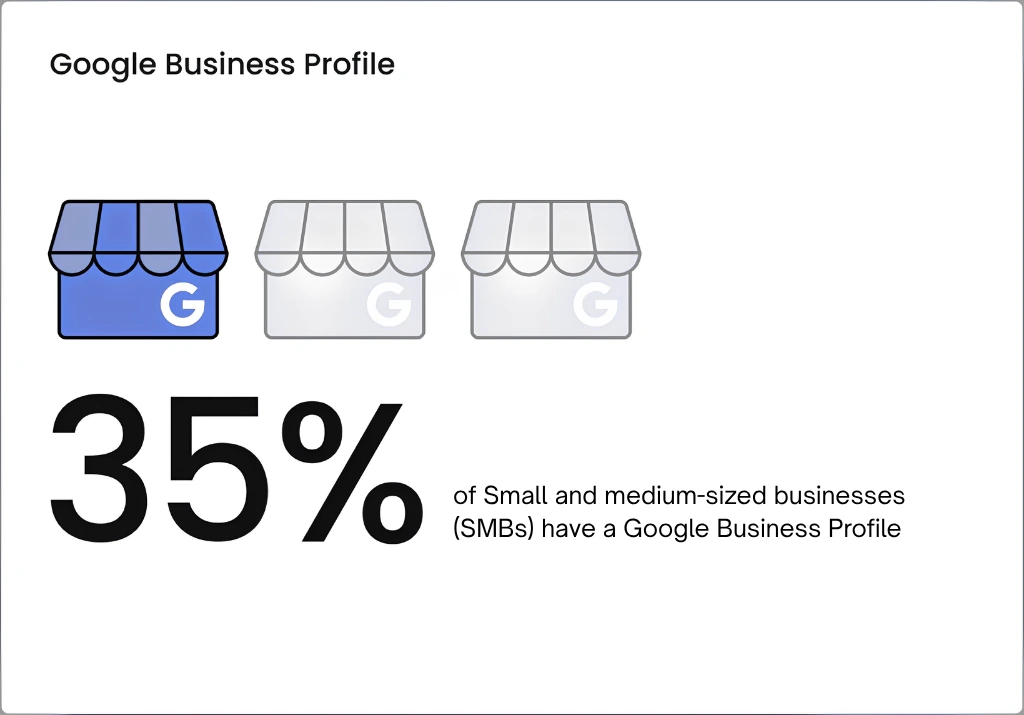
Search data around local business listings consistently shows that profiles driven by strong local visibility tend to see higher engagement than a website page alone for "near me" style searches.
[DATA: Local SEO Industry Report]
8. Proactively Manage Reviews and Reputation
Choosing a fertility clinic is one of the most personal medical decisions someone can make, so it's no surprise patients lean heavily on reviews before booking. A handful of thoughtful, recent reviews can outweigh even the best-written service page.
Research on patient decision-making for elective and specialized care consistently shows that review volume and rating strongly influence which provider a patient ultimately chooses. For fertility care specifically, patients often read reviews looking for emotional reassurance as much as clinical outcomes.
A few habits worth building into your routine:
- Ask satisfied patients for reviews at the right moment, ideally right after a positive milestone
- Respond to every review within a few days, thanking positive reviewers and addressing concerns in negative ones calmly and professionally
- Never argue with a reviewer publicly, even when you disagree with their account
- Keep an eye on review sites beyond Google, including fertility-specific forums and communities
Reputation management isn't a one-time task. It's an ongoing part of how patients decide whether to trust your clinic before they've spoken to anyone on your team.
9. Improve Website Crawlability and Indexability
None of your content matters if Google can't actually find and read it. This is the unglamorous but essential side of Technical SEO, and it's worth checking regularly, not just once at launch.
A few common issues that quietly hurt fertility clinic websites:
- Broken links pointing to old treatment pages that no longer exist
- Pages accidentally blocked from indexing in robots.txt
- Missing or messy XML sitemaps that don't reflect your current site structure
- Slow-loading pages that search engines deprioritize crawling
- Duplicate content across similar service or location pages
Good Website Design For Healthcare takes crawlability into account from the start, not as an afterthought. A clean site structure, fast load times, and clear navigation aren't just nice for patients; they're what let search engines properly understand and rank your pages.
Running a free crawl using a tool like Google Search Console or Screaming Frog every few months is enough to catch most of these issues before they cost you rankings.
10. Implement Healthcare-Specific Schema Markup
Schema markup serves as an intermediary that facilitates communication between your website and search engines. It tells Google exactly what kind of content is on a page, so it can display it more accurately, and sometimes more prominently, in search results.
Technical SEO for healthcare websites benefits from a few specific schema types:
- MedicalClinic Schema for your main site, confirming what kind of practice you are
- Physician Schema for doctor bio pages, including credentials and specialties
- FAQPage Schema for any page with common patient questions
- Review Schema to help patient testimonials show up as star ratings in search results
Adding schema won't magically boost rankings on its own, but it makes your content easier for search engines, and increasingly for AI tools like ChatGPT and Perplexity, to understand and pull from accurately. That matters more every year as more patients get answers directly in search results without clicking through. Most CMS platforms have plugins that handle schema without needing to touch code directly, so this is one of the more accessible technical wins available.
11. Establish Topical Authority with Content Clusters
Ranking for one keyword is fine. Ranking for an entire topic is what actually moves the needle. That's the idea behind content clusters, and it's one of the most effective long-term strategies for building fertility center SEO.
Here's how it works: pick a broad topic, say, IVF, and build a "pillar" page covering it comprehensively. Then create supporting pages around specific subtopics, all linking back to that pillar:
- Pillar: "Complete Guide to IVF Treatment"
- Cluster pages: "IVF Success Rates by Age," "IVF Cost Breakdown," "IVF vs IUI," "What to Expect During an IVF Cycle"
Good SEO Content Writing ties these pages together with consistent internal links, so both patients and search engines understand how they relate. Over time, this signals to Google that your site is a genuine authority on the topic, not just a single page that happened to rank once.
Content clusters also give patients a natural path to keep exploring your site instead of bouncing after one page, which quietly improves engagement metrics that search engines factor into rankings anyway.
12. Boost E-E-A-T with Physician Bios and Medical Reviews
Google treats fertility and medical content as YMYL "Your Money or Your Life", which means it holds this content to a higher standard than a typical blog post. Getting E-E-A-T right isn't optional here; it's foundational.
Google's own search guidelines emphasize author expertise and credentials as a key trust signal for medical content.
For on page seo services healthcare to actually work on fertility content, a few things need to be in place:
- Detailed physician bios with credentials, specialties, and years of experience
- A clear "medically reviewed by" byline on treatment and health content
Author pages linking back to relevant published content
- Transparent information about the clinic's licensing and accreditations
Patients researching fertility treatment are often anxious and looking for reassurance as much as information. Seeing a real doctor's name and credentials attached to the content they're reading does more to build confidence than any amount of polished copywriting.
This is also one of the fastest ways to differentiate your clinic from content mills and generic health sites competing for the same search terms.
13. Refine Site Architecture and Internal Linking
A confusing website hurts both patients and search engines equally. If a visitor can't find your IVF cost page in three clicks, neither can Google, and both will lose patience.
Good site architecture keeps your structure shallow and logical:
- Homepage → Treatment category → Specific treatment page (no more than 3 clicks deep)
- A clear main navigation covering treatments, physicians, locations, and patient resources
- A logical URL structure that mirrors your site hierarchy (yoursite.com/treatments/ivf, not random strings)
Internal linking then ties it all together. Every blog post, treatment page, and location page should link to relevant related pages, using descriptive anchor text rather than generic "click here" links.
This matters for two reasons. Patients naturally continue exploring related content instead of leaving after one page, and search engines use those internal links to understand which pages on your site matter most. A well-linked treatment page tends to carry more authority than an orphaned page sitting three levels deep with no links pointing to it.
If you've been publishing content for a while without much internal linking strategy, an audit of your existing pages is often one of the highest-return fixes available, since you're just reorganizing connections between content you've already built.
14. Use Guest Posting and Digital PR to Build Authority
Backlinks from trusted sources still carry real weight for off-page seo, especially in healthcare, where Google rewards sites that other credible sources vouch for.
For fertility clinics, that means pitching guest posts to parenting blogs, women's health publications, and local news outlets. Physician interviews and expert quotes for journalist queries work well too, since they build authority without feeling like self-promotion.
Link building for healthcare works best when it's genuinely useful content, not a thinly veiled pitch. A physician-authored piece on managing IVF stress will earn links naturally, because people actually want to share it.
15. Focus on Mobile Experience and Page Speed
Most patients are researching on their phones, often quietly, between appointments or late at night. A slow or clunky mobile site loses them before they even read a word.
Keep load times under three seconds, use large tap-friendly buttons, and make sure forms work smoothly on smaller screens. Speed and usability directly affect both rankings and conversions.
16. Showcase Patient Reviews and Testimonials
Real patient stories build trust faster than any marketing copy. Feature testimonials directly on treatment pages, not just a separate reviews page, so patients see proof right where they're deciding.
Video testimonials work especially well for emotional topics like fertility, giving hesitant visitors the reassurance they need to book.
17. Ensure Cost and Insurance Transparency
Fertility treatment costs are a major source of anxiety, and vague pricing pages only add to it. Publish clear cost ranges, financing options, and which insurance providers you work with.
Patients who understand the financial picture upfront are far more likely to book a consultation than those left guessing.
18. Create CTAs That Drive Conversions
Every page should guide patients toward one clear next step. Skip generic buttons like "Learn More" in favor of specific, low-pressure CTAs like "Book Your Free Consultation" or "Check Your Treatment Costs."
Partnering with a dedicated seo agency for fertility clinics can help test and refine these CTAs so they actually convert visitors into booked patients.
19. Track Performance Using Search Console and Analytics
You can't improve what you're not measuring. Google Search Console and Analytics show exactly which pages are ranking, which searches are bringing in visitors, and where patients are dropping off before booking.
Running a quarterly Seo Audit keeps your strategy honest. It's the difference between guessing what's working and knowing it, based on real numbers like impressions, click-through rate, and which pages actually lead to consultation requests.
Watch a few key metrics closely:
- Which keywords are driving impressions but low clicks (a sign your title tag or meta description needs work)
- Which pages rank on page two, close to breaking into page one with a small push
- Where visitors land versus where they exit, which often reveals a weak or missing CTA
20. Optimize Content Based on Search Performance Data
SEO isn't a one-and-done project. It's an ongoing cycle of checking what's working, fixing what isn't, and updating content as patient search behavior shifts.
If a treatment page's rankings start slipping, refresh it with updated success rates, newer patient testimonials, or answers to questions patients are now asking. AI in healthcare SEO is changing this cycle too, since AI overviews and chat-based search increasingly pull answers directly from well-structured, clearly written pages rather than sending patients to click through.
Clinics that revisit and refine their content regularly tend to hold rankings longer than those that publish once and move on.
Ready to refresh your brand?
Contact Upclues today and start your branding journey.
Final Thoughts
SEO for fertility clinics isn't a single fix. It's dozens of small, deliberate choices, from how your service pages read to how quickly they load, that together decide whether a searching patient finds you or a competitor.
The clinics that win visibility long-term treat SEO as ongoing, not a one-time project. Rankings shift, patient search behavior changes, and content needs regular attention to keep working.
If you're not sure where your biggest gap is, that's usually the best place to start. Whether it's thin service pages, a neglected Google Business Profile, or missing physician bios, identifying that one weak point often unlocks the most immediate growth.
Working with experienced seo companies for fertility clinics can help you prioritize the right fixes first instead of guessing. If you're ready to see where your clinic's SEO stands today, Contact Upclues and we can walk you through it.
Frequently Asked Questions
1. How long does SEO take to show results for a fertility clinic?
Most fertility clinics start seeing measurable movement in three to six months, with stronger results building over six to twelve months. Timelines depend on your site's current state, competition in your area, and how consistently you publish and optimize content.
2. What are the best keywords for fertility/IVF clinic SEO?
The best keywords combine broad terms like "fertility clinic" with specific, condition-driven phrases like "IVF success rates by age" or "low AMH treatment options." Long-tail, condition-specific keywords generally convert better because they match exactly what a patient is searching for.
3. Why is local SEO so important for fertility clinics?
Most patients search for fertility care close to home, using phrases like "fertility clinic near me." Local SEO, especially a fully optimized Google Business Profile, helps your clinic show up in these location-based searches where patients are ready to book.
4. Do fertility clinics need medically reviewed content?
Yes. Fertility content falls under Google's YMYL (Your Money or Your Life) standards, meaning accuracy and expertise matter more than usual. Medically reviewed content, paired with physician bios, builds the trust patients and search engines both look for.
5. How much should a fertility clinic budget for SEO?
Budgets vary widely based on clinic size, competition, and goals, but most clinics invest a consistent monthly amount rather than a one-time spend. Ongoing investment tends to outperform sporadic campaigns, since SEO compounds over time rather than delivering instant results.
Ready to refresh your brand?
Contact Upclues today and start your branding journey.