



How Website Design for Gastroenterology Shapes Patient First Impressions
July 27, 2026
Physical Therapy SEO: The Complete 2026 Guide to Rankings, Patients & AI Search
August 4, 2026How Website Design for Gastroenterology Shapes Patient First Impressions
July 27, 2026Physical Therapy SEO: The Complete 2026 Guide to Rankings, Patients & AI Search
August 4, 2026SEO for Herbal Products: The Complete Guide for Ayurvedic Supplement Manufacturers
August 1, 2026
- 15 min to Read
Overview
- In this guide, you'll learn how customers search for herbal and Ayurvedic products online and what influences their purchasing decisions.
- You'll also understand why SEO for health and wellness businesses requires a stronger focus on trust, expertise, and content quality than many other industries.
- We'll walk through ten practical SEO strategies to help improve your search rankings, increase organic traffic, and generate qualified enquiries.
- You'll discover how to optimize your website for both Google Search and AI-powered platforms like Google AI Overviews, ChatGPT, Gemini, and Perplexity, while applying Google's EEAT principles to build credibility and authority.
- Finally, we'll cover the most common SEO mistakes herbal brands should avoid, along with actionable SEO and AI Search checklists that you can use to strengthen your long-term digital marketing strategy and achieve sustainable online growth.
See How We Helped Shree Shanker Ayurvedic Pharmacy Boost eCommerce Sales with SEO
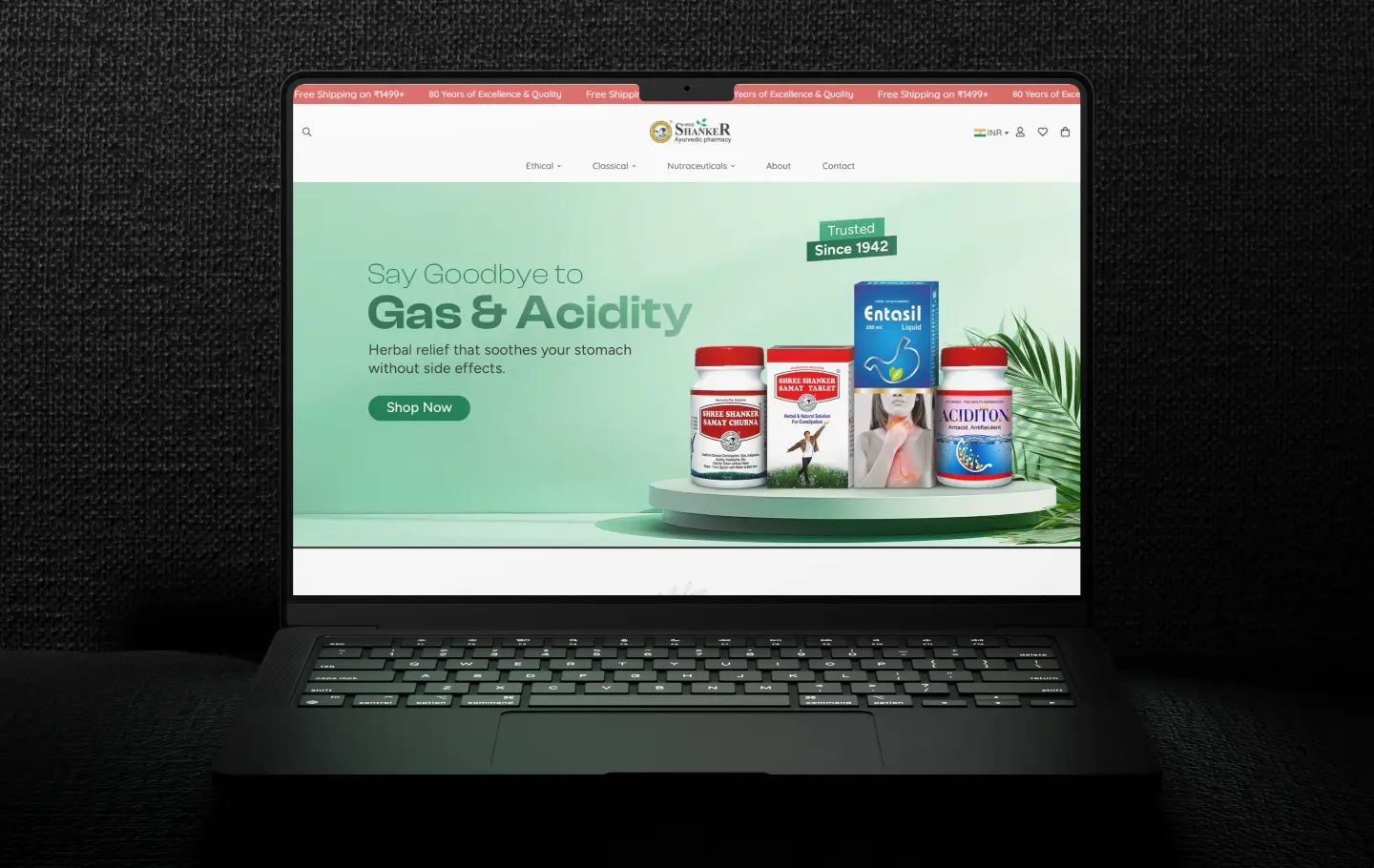
Why Ayurvedic Brands Need a Modern SEO Strategy
The herbal and Ayurvedic industry is experiencing unprecedented growth as consumers increasingly turn to natural solutions for immunity, digestion, stress management, skincare, and overall wellness. According to Grand View Research, the global herbal supplements market was valued at USD 42.3 billion in 2024 and is projected to reach USD 90.2 billion by 2033, growing at a CAGR of 8.9%.
This rapid growth is driven by rising health awareness, increasing demand for preventive healthcare, and a growing preference for natural and plant-based products.
From established manufacturers to emerging D2C brands, businesses are competing in a rapidly expanding digital marketplace where online visibility plays a crucial role in attracting customers and generating sales.
Today's buyers rarely purchase a herbal supplement without conducting research first. They compare ingredients, read customer reviews, evaluate certifications, explore manufacturing standards, and look for trusted recommendations before making a decision. While Google remains the primary search engine, customers are also using Google AI Overviews, ChatGPT, Gemini, Perplexity, and other AI-powered search platforms to discover products and find reliable health information.
Instead of searching only for product names like Ashwagandha Capsules or Triphala Powder, users now ask questions such as:
- Which Ayurvedic supplement helps improve immunity?
- What are the benefits of Ashwagandha?
- Which herbal supplement manufacturer is GMP-certified?
- Who is the best private-label Ayurvedic manufacturer in India?
This shift means SEO is no longer just about ranking for keywords. Modern SEO is about creating trustworthy, helpful, and authoritative content that answers customer questions while demonstrating your expertise. Businesses that consistently educate their audience, optimize their websites, and build credibility are more likely to earn visibility across both traditional search engines and AI-powered search experiences.
Whether you're an Ayurvedic supplement manufacturer, herbal product exporter, private-label manufacturer, or an eCommerce wellness brand, investing in SEO can help you increase organic visibility, attract qualified customers, generate more enquiries, strengthen your brand authority, and build a sustainable source of organic traffic for long-term business growth.
Why SEO Is Different for Herbal & Ayurvedic Products
SEO for herbal and Ayurvedic products requires a different approach than many other industries. Since these products are directly related to health and wellness, search engines place greater emphasis on accuracy, credibility, and user trust. Customers are not simply looking for a product—they're looking for reliable information before making a purchase.
Google classifies health-related content under Your Money or Your Life (YMYL) topics, which means websites must demonstrate expertise, transparency, and trustworthiness to earn strong rankings. Inaccurate information, exaggerated claims, or poor-quality content can negatively impact both user trust and search visibility.
To improve your rankings, focus on publishing accurate and educational content, showcasing manufacturing certifications, highlighting quality standards, providing transparent ingredient information, and sharing authentic customer reviews. Rather than making unrealistic health claims, create content that helps customers make informed decisions.
Building trust is just as important as targeting the right keywords. Brands that consistently provide valuable, evidence-based information are more likely to gain visibility in both Google Search and AI-powered search platforms.
10 SEO Strategies Every Ayurvedic Supplement Manufacturer Should Implement
1. Understand Customer Search Intent
Successful SEO begins with understanding why people search—not just what they search.
While many Ayurvedic brands optimize their websites for product names like Ashwagandha Capsules or Triphala Powder, potential customers are more likely to search for the health benefits they want to achieve—such as reducing stress, improving digestion, boosting immunity, or supporting joint health—before they know which product they need.
Examples include:
- Natural remedies for stress
- Best Ayurvedic supplement for digestion
- Herbal products to boost immunity
- Natural joint pain relief
- Trusted Ayurvedic supplement manufacturer
Pro Tip: Review customer enquiries, emails, WhatsApp conversations, and support requests to identify recurring questions. These real-world questions often become excellent blog topics and FAQ content that attract qualified organic traffic.
2. Target High-Intent Keywords Instead of Broad Keywords
Not all keywords deliver the same value. Many businesses chase broad keywords like Ayurveda, Herbal Products, or Natural Medicine because they have high search volume. However, these terms are extremely competitive and often attract users who are simply researching rather than looking to buy.
Instead, focus on high-intent keywords that indicate commercial interest or purchase intent.
Examples include:
- Ayurvedic supplement manufacturer in India
- Private-label herbal supplements
- Third-party Ayurvedic manufacturing company
- GMP-certified herbal manufacturer
- Herbal immunity booster capsules
- Ayurvedic products for digestion
- Organic herbal supplements online
These long-tail keywords usually have lower competition and attract visitors who are closer to making a purchase or submitting an inquiry.
Use keyword research tools to identify opportunities based on search volume, keyword difficulty, and user intent. Prioritize keywords that align with your products, services, and target audience instead of focusing only on high search numbers.
3. Build Topical Authority Around Ayurveda
Search engines reward websites that demonstrate comprehensive expertise rather than publishing isolated blog posts.
Instead of creating random articles, organize your content into topic clusters around your products and areas of expertise.
For example, if Ashwagandha is one of your flagship products, you could create a content hub that includes:
- Benefits of Ashwagandha
- Ashwagandha Dosage Guide
- Ashwagandha vs Ginseng
- Scientific Research on Ashwagandha
- Frequently Asked Questions About Ashwagandha
- How Ashwagandha Supports Stress Management
Each article should link to your Ashwagandha product page and other related content.
This interconnected structure helps search engines understand your expertise while encouraging visitors to explore more pages on your website. Over time, topical authority improves rankings for both informational and commercial keywords while strengthening your brand's credibility.
4. Optimize Product and Category Pages
For eCommerce brands, product and category pages are often the most valuable pages on the website. They should do more than simply display products—they should educate customers, answer questions, and encourage conversions.
Every product page should include:
- A unique product description
- Key ingredients and their benefits
- Usage instructions
- Product specifications
- Certifications and quality standards
- Frequently Asked Questions
- Customer reviews
- High-quality product images with
- descriptive alt text
- Related products
- A clear call-to-action
Similarly, category pages should include introductory content explaining the product category, its benefits, and the types of products available. This helps search engines understand the page while providing additional value to visitors. Strong On-page SEO practices such as optimizing headings, title tags, meta descriptions, internal links, image alt text, and keyword placement make these pages easier for both search engines and AI-powered search platforms to interpret.
Implementing structured data such as Product Schema, FAQ Schema, Review Schema, and Breadcrumb Schema can also improve your visibility in search results by enabling rich snippets and helping search engines better understand your content.
5. Create Helpful, Educational Content That Builds Trust
Content marketing is one of the most effective ways to improve your SEO while establishing your brand as a trusted authority in the herbal and Ayurvedic industry. Rather than creating promotional articles focused only on selling products, develop content that educates, informs, and solves your audience's problems.
Think about the questions your customers ask before making a purchase. They want to understand ingredients, health benefits, usage instructions, quality standards, and the differences between products. By answering these questions through high-quality content, you can attract visitors earlier in their buying journey and guide them toward your products.
Some valuable content ideas include:
- Benefits of Ashwagandha for Stress Management
- How to Choose the Right Herbal Supplement
- Best Ayurvedic Herbs for Immunity
- Shilajit vs. Ashwagandha: Which One Is Right for You?
- Seasonal Ayurvedic Wellness Tips
- Understanding GMP, FSSAI, and AYUSH Certifications
- Common Myths About Herbal Supplements
Whenever possible, support your content with references to recognized Ayurvedic principles, scientific studies, or reputable health organizations. Avoid exaggerated medical claims and instead provide balanced, informative content that helps readers make informed decisions. Working with an expert content writer who understands SEO, healthcare compliance, and the Ayurvedic industry can help ensure your content remains accurate, trustworthy, and aligned with both user expectations and search engine quality standards.
Consistently publishing high-quality content not only improves your search rankings but also builds long-term trust with both customers and search engines.
6. Strengthen Your Brand with EEAT
For herbal and Ayurvedic businesses, trust is one of the most important ranking factors.
Google evaluates health-related websites using the EEAT framework, which stands for Experience, Expertise, Authoritativeness, and Trustworthiness. Because herbal supplements fall under Your Money or Your Life (YMYL) topics, websites are expected to provide accurate, transparent, and reliable information.
To strengthen your EEAT signals:
- Showcase GMP, ISO, AYUSH, Organic, or FSSAI certifications.
- Highlight your manufacturing process and quality control standards.
- Create detailed company and "About Us" pages.
- Introduce your founders, experts, or technical team.
- Display customer testimonials and verified reviews.
- Provide clear contact information and business details.
- Keep product information accurate and up to date.
The more trustworthy your website appears, the more confidence customers—and search engines—will have in your brand.
7. Improve Local & B2B SEO
If you manufacture herbal or Ayurvedic products, local SEO isn't just for retail stores. It can also help you attract distributors, wholesalers, exporters, and businesses looking for private-label or third-party manufacturing partners.
Optimize your website for location-based searches by targeting keywords such as:
- Ayurvedic Supplement Manufacturer in India
- Herbal Supplement Manufacturer in Ahmedabad
- Private Label Herbal Manufacturer
- Third-Party Ayurvedic Manufacturing Company
- Herbal Product Exporter
In addition, optimize your Google Business Profile, ensure your business information is consistent across online directories, and encourage satisfied customers to leave reviews.
If your company serves multiple cities or countries, create dedicated landing pages for each major market instead of trying to target every location from a single page.
Strong local and B2B SEO can significantly increase qualified enquiries from businesses actively searching for manufacturing partners. For Ayurvedic supplement manufacturers, these strategies work alongside broader seo for manufacturing best practices by improving visibility among distributors, private-label clients, exporters, and B2B buyers looking for reliable production partners online.
8. Optimize Your Website for Google AI & AI Search
The way people search online is changing rapidly. Alongside traditional Google Search, users now rely on Google AI Overviews, ChatGPT, Gemini, Perplexity, and other AI-powered search platforms to discover products and find trusted recommendations.
These platforms don't simply rank pages—they evaluate content quality, authority, and relevance before generating responses.
To improve your visibility in AI-powered search:
- Answer customer questions clearly and comprehensively.
- Use descriptive headings and logical content structure.
- Add FAQ sections to important pages.
- Publish original research, insights, and educational resources.
- Keep product information updated and accurate.
- Showcase certifications and manufacturing expertise.
- Build quality backlinks from trusted industry websites as part of a strong Off-page SEO strategy.
- Maintain consistent business information across all online platforms.
The goal isn't to optimize for one AI platform but to create content that is helpful, trustworthy, and easy for both users and AI systems to understand.
`9. Measure SEO Performance Using Business Metrics
SEO success should be measured by business outcomes—not just keyword rankings.
While rankings are useful, the real value of SEO comes from attracting qualified visitors who engage with your website and become customers.
Track important metrics such as:
- Organic traffic
- Keyword visibility
- Product page visits
- Contact form submissions
- Distributor and wholesale enquiries
- Online sales and conversions
- Click-through rate (CTR)
- Average engagement time
- Bounce rate
Use tools like Google Analytics 4 and Google Search Console to monitor your website's performance and identify opportunities for improvement.
Regularly review your data, update underperforming pages, refresh outdated content, and optimize pages that already receive traffic but have low conversion rates. Conducting a regular seo audit also helps identify technical issues, content gaps, broken links, indexing problems, and optimization opportunities that can improve your website's overall search performance.
10. Stay Consistent and Focus on Long-Term Growth
SEO isn't a one-time project—it is an ongoing strategy that delivers results through consistency.
Many businesses publish a few blog posts or optimize their website once and expect immediate rankings. However, successful SEO requires continuous improvement.
Create a monthly SEO plan that includes:
- Publishing new educational content.
- Updating existing articles with fresh information.
- Optimizing product and category pages.
- Improving website speed and user experience.
- Building high-quality backlinks.
- Collecting customer reviews.
- Monitoring keyword performance.
- Fixing technical SEO issues.
Small improvements made consistently over time can generate significant increases in organic traffic, qualified enquiries, and online sales.
Remember, SEO is a marathon, not a sprint. The brands that invest consistently in high-quality content, technical optimization, and customer trust are the ones that build sustainable online visibility.
Ready to refresh your brand?
Contact Upclues today and start your branding journey.
Essential SEO Checklist for Ayurvedic Manufacturers
Before publishing or updating your website, make sure you've completed these SEO essentials:
- Research high-intent keywords for every product and service.
- Write unique title tags and meta descriptions.
- Optimize product and category pages with detailed content.
- Add Product, FAQ, Review, and Breadcrumb Schema where appropriate.
- Improve page speed and mobile responsiveness.
- Optimize images with descriptive file names and alt text.
- Publish educational blogs consistently.
- Build internal links between related pages.
- Earn backlinks from trusted healthcare and industry websites.
- Optimize your Google Business Profile.
- Keep certifications, product details, and company information updated.
- Regularly review website performance using Google Analytics and Search Console.
Following this checklist will strengthen your website's SEO foundation and improve your chances of ranking for competitive keywords.
AI Search Optimization Checklist
As AI-powered search continues to evolve, businesses should optimize their websites for both search engines and AI assistants.
Use this checklist to improve your AI visibility:
- Answer customer questions in a clear and conversational format.
- Structure content with descriptive headings and subheadings.
- Include FAQ sections on key pages.
- Publish original insights, research, and educational resources.
- Keep product information accurate and up to date.
- Demonstrate expertise through certifications and transparent company information.
- Build topical authority around your core products and services.
- Earn mentions and backlinks from trusted industry websites.
- Maintain consistent business information across your website and online directories.
- Regularly update content to reflect changing customer needs and search trends.
Common SEO Mistakes Herbal Brands Should Avoid
Even well-established Ayurvedic and herbal brands can struggle to achieve strong organic visibility because of avoidable SEO mistakes. These issues often limit search rankings, reduce website traffic, and affect conversions.
Here are some of the most common mistakes to avoid:
1. Targeting Broad Keywords Instead of High-Intent Searches
Many businesses focus on broad keywords like Ayurveda, Herbal Products, or Natural Medicine. While these keywords may have high search volumes, they are highly competitive and often attract users who are still researching rather than ready to buy.
Instead, prioritize long-tail, high-intent keywords such as Private Label Ayurvedic Manufacturer, Herbal Immunity Booster Capsules, or Third-Party Herbal Supplement Manufacturer to attract more qualified visitors.
2. Using Thin or Duplicate Product Content
Many eCommerce websites rely on manufacturer-supplied product descriptions or publish only a few lines of content for each product. Duplicate or thin content provides little value to users and makes it difficult for search engines to understand why your pages deserve to rank.
Create unique product descriptions that include ingredients, benefits, usage instructions, certifications, FAQs, and high-quality images.
3. Ignoring Technical SEO
A slow, poorly optimized website can negatively impact both rankings and user experience.
Regularly audit your website to ensure:
- Fast loading speed
- Mobile-friendly design
- Secure HTTPS connection
- Optimized images
- Clean site architecture
- XML sitemap
- Proper internal linking
- No broken links or crawl errors
4. Publishing Inconsistent or Low-Quality Content
Publishing blog posts occasionally and then stopping for months limits your website's growth.
Create a consistent content calendar focused on educational topics, customer questions, ingredient guides, and wellness advice. Updating older articles with fresh information also helps maintain relevance and improve rankings.
5. Making Unsupported Health Claims
Herbal and Ayurvedic products are health-related, so credibility is essential.
Avoid exaggerated claims such as "guaranteed cure" or "works instantly." Instead, provide accurate information supported by recognized Ayurvedic principles, scientific research where appropriate, and applicable regulatory guidelines. This helps build trust with customers and aligns with search engine quality expectations.
6. Overlooking Customer Reviews and Trust Signals
Customer reviews, certifications, manufacturing standards, awards, and testimonials all help build credibility.
Displaying these trust signals across your website can improve both user confidence and conversion rates while reinforcing your brand's authority.
7. Ignoring AI Search Optimization
Many businesses still optimize only for traditional search engines. However, customers are increasingly using AI-powered platforms like Google AI Overviews, ChatGPT, Gemini, and Perplexity to research products.
Creating well-structured, informative, and trustworthy content increases your chances of appearing in AI-generated recommendations alongside traditional search results.
Final SEO Action Plan
If you're ready to improve your herbal or Ayurvedic website's visibility, follow this step-by-step action plan:
- Audit your website to identify technical, content, and SEO gaps.
- Research high-intent keywords that match your products and target audience.
- Optimize product, category, and landing pages with comprehensive, unique content.
- Publish educational blogs consistently to build topical authority.
- Strengthen EEAT by showcasing certifications, manufacturing standards, customer reviews, and company expertise.
- Implement Product, FAQ, Review, and Breadcrumb Schema to help search engines understand your content.
- Improve website speed, mobile usability, and overall user experience.
- Build high-quality backlinks from reputable healthcare and industry websites.
- Monitor performance using Google Analytics and Google Search Console.
- Review, update, and improve your content regularly to stay aligned with changing search trends and AI-powered search experiences.
Final Thoughts
The future of herbal product marketing extends beyond traditional Google rankings. Consumers now discover brands through search engines, AI-powered search platforms, online reviews, and educational content across multiple digital channels. Businesses that focus solely on keywords risk missing valuable opportunities to connect with their audience.
To succeed in today's competitive landscape, herbal and Ayurvedic brands must create helpful content, optimize every stage of the customer journey, and build trust through expertise, transparency, and consistent quality. Whether you're a manufacturer, exporter, private-label partner, or eCommerce business, a strong SEO strategy can help you attract qualified visitors, strengthen your online reputation, and generate sustainable long-term growth.
By understanding customer search intent, publishing authoritative content, improving technical SEO, optimizing for AI-powered search, and continuously refining your website, you can position your brand for long-term success in an increasingly competitive digital marketplace.
At Upclues, we specialize in helping herbal and Ayurvedic brands grow through strategic SEO, branding, website design, and digital marketing. With experience working with manufacturers, wellness brands, and eCommerce businesses, we create tailored strategies that improve online visibility, strengthen brand authority, and drive sustainable business growth. The brands that educate, inspire confidence, and consistently deliver value will be the ones that stand out—not only in Google Search but also in the next generation of AI-driven search experiences. If you're looking to grow your herbal or Ayurvedic business online, partnering with an experienced SEO and branding agency can help you turn your digital presence into a long-term competitive advantage.
Frequently Asked Questions (FAQs)
1. How long does SEO take for an Ayurvedic supplement website?
SEO is a long-term investment. While every website is different, many businesses begin seeing measurable improvements within three to six months. Highly competitive keywords may require additional time, depending on your industry, website authority, and competition.
2. Is SEO better than paid advertising?
SEO and paid advertising serve different purposes. Paid campaigns can generate immediate traffic, while SEO builds long-term organic visibility and sustainable customer acquisition. A balanced marketing strategy often combines both approaches.
3. Why is EEAT important for herbal products?
Herbal supplements fall under Google's Your Money or Your Life (YMYL) category, making trust and credibility especially important. Demonstrating Experience, Expertise, Authoritativeness, and Trustworthiness (EEAT) helps improve both search visibility and customer confidence.
4. Can AI-powered search help customers discover my products?
Yes. AI-powered platforms such as Google AI Overviews, ChatGPT, Gemini, and Perplexity increasingly recommend brands that publish accurate, well-structured, and authoritative content. Optimizing for AI search can complement your traditional SEO efforts.
5. Should Ayurvedic manufacturers publish blogs?
Absolutely. Educational blogs help answer customer questions, improve keyword rankings, build topical authority, and establish your brand as a trusted source of information. They also support product pages by attracting users earlier in the buying journey.
6. How often should I update my website's content?
Review and update important pages every few months or whenever product information, certifications, or search trends change. Regularly refreshing content helps maintain accuracy and improves long-term SEO performance.
Ready to refresh your brand?
Contact Upclues today and start your branding journey.